In-depth review
Shure MV7 Review (2026)
Research review of the Shure MV7 hybrid USB/XLR dynamic microphone for podcasting and voice work.
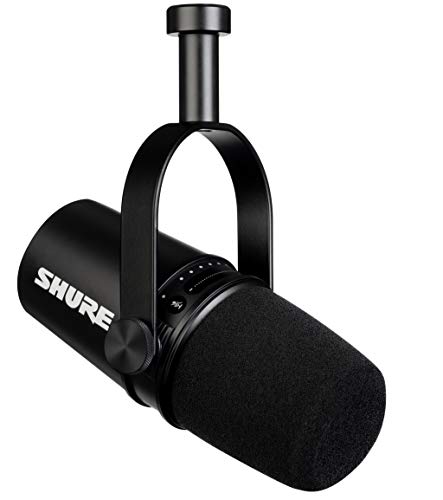
Shure MV7
Broadcast voice with a USB/XLR future.
Our verdict
The Shure MV7 is the podcaster's USB microphone. Its dynamic capsule, descended from the legendary SM7B lineage, rejects room noise and delivers a rich, broadcast-style voice with minimal fuss. USB and XLR outputs mean it works today with your laptop and tomorrow with a full audio interface. It costs more than entry-level USB mics, but it is the one most likely to stay in your setup for years.
What we like
- Dynamic capsule with excellent room rejection
- USB and XLR outputs
- Voice-tuned DSP and auto-level mode
- Rich, broadcast-style sound
What to watch out for
- Premium pricing
- Wants close mic technique
- Single cardioid pattern
Who it is for
Best for podcasters and voice creators in untreated rooms who want professional sound and a future upgrade path.
Voice quality
The dynamic capsule is tuned for the human voice, with a warm low end and controlled highs that flatter speech without harshness. Voice Isolation Technology and an auto-level mode keep volume consistent even if you drift from the mic. Reviewers consistently describe the sound as broadcast-ready with minimal processing.
USB plus XLR
The hybrid output is the MV7's killer feature. Start on USB with the companion app's DSP, then connect via XLR to an interface or mixer later without buying a new mic. Few competitors offer this flexibility at this level.
Room forgiveness
As a dynamic mic, the MV7 is far less sensitive than condensers, so echo, fans, and street noise stay in the background. It wants to be worked close, within a few inches, which further improves the voice-to-room ratio. This makes it ideal for bedrooms and home offices.
What owners report
Commonly praised
- Warm, clear vocal sound that owners say holds up for years
- Both USB and XLR outputs give it room to grow
- It rejects background noise well when used close up
Common complaints
- It must be used very close to the mouth or the sound thins out
- Touch controls can be triggered by accident
- The cable connection feels flimsy, and no stand or shock mount is included
Recurring themes from owner reviews on retailers and forums, summarised by our editors. Updated October 2026.
Key specifications
- Capsule
- Dynamic, voice-tuned
- Outputs
- USB and XLR (hybrid)
- Pattern
- Cardioid
- DSP
- Voice Isolation Technology, auto-level mode
- Monitoring
- Headphone output with zero-latency monitoring
Also consider

Blue Yeti X
The versatile creator standard.
- Capsule: 4-capsule condenser array
- Resolution: 24-bit / 48 kHz

Fifine K688
Dynamic clarity on a budget.
- Capsule: Dynamic
- Outputs: USB and XLR (hybrid)
Research-based assessment. ThePickLedger has not hands-on tested this product; this evaluation synthesizes manufacturer specifications, retailer documentation, and published expert reviews.
Questions, answered
Is the Shure MV7 better than the SM7B?
They share DNA but serve different users. The MV7 adds USB connectivity and onboard DSP for simple setups, while the SM7B is XLR-only and needs a strong preamp. Beginners should choose the MV7.
Does the MV7 need a Cloudlifter or preamp?
On USB, no, the onboard preamp is sufficient. On XLR, it benefits from clean gain like the SM7B, though many modern interfaces provide enough.
Can I use the MV7 for streaming?
Absolutely. Its room rejection is ideal for keyboard-heavy setups, and tap-to-mute plus monitoring work well on stream.